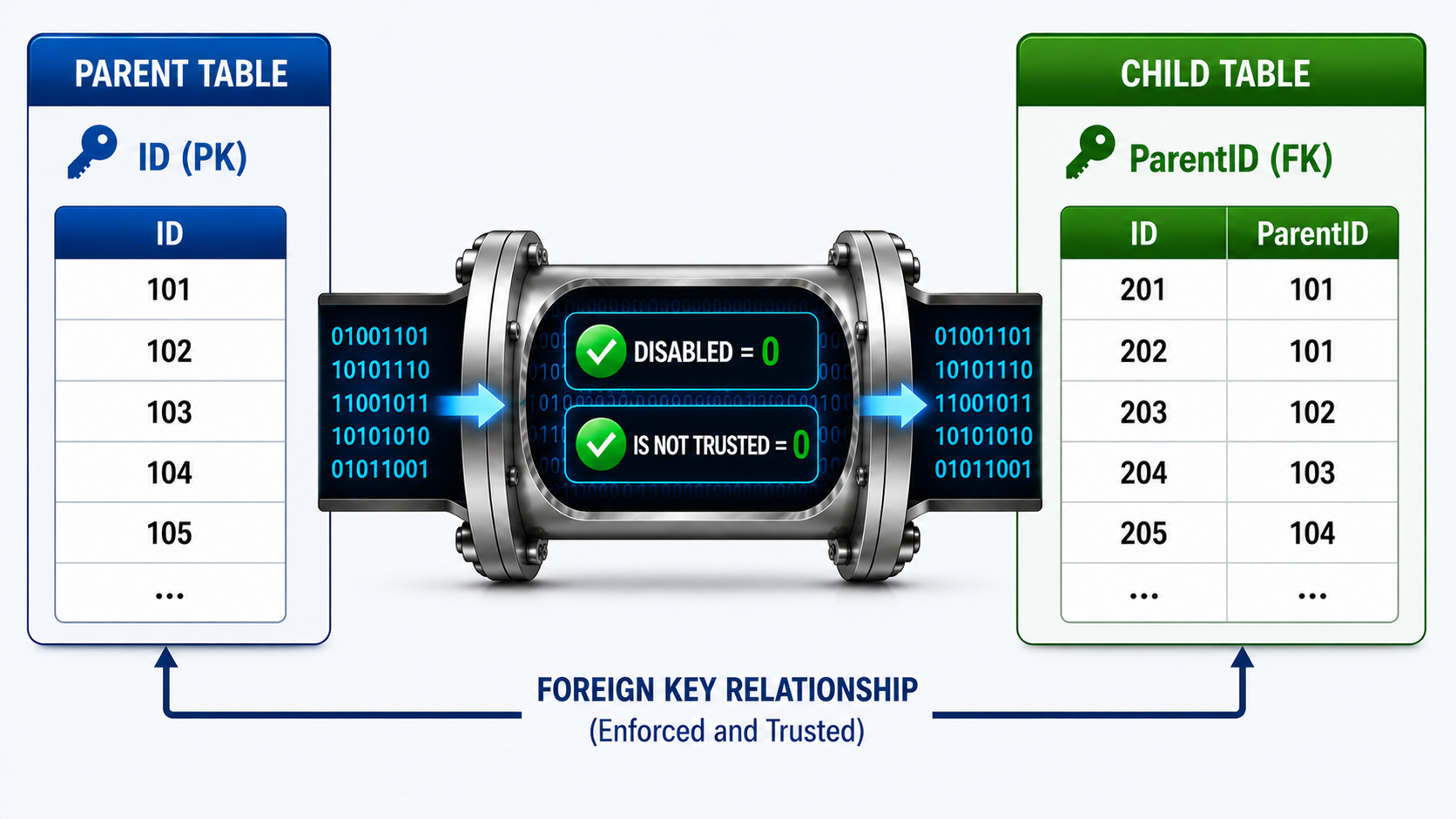
This is the first article I have written on LinkedIn and X,
and now also my first blog article published on my website.
I wanted to share some of my thoughts because I have always had
a long-time respect for Codd’s Rules principles and the relational model itself.
In my view, this work deserves preservation and ongoing respect because
E. F. Codd’s contribution to computing was extraordinary.
He received the Turing Award in 1981 for inventing the relational model
for database management systems, an achievement often regarded as the
equivalent of a Nobel Prize in Computing.
This article is very much connected to those principles.
I have worked with databases for over three decades.
One of the most overlooked governance issues I have seen across departments,
non-profit organisations, and private sector businesses is weak data integrity.
This becomes especially dangerous in reporting systems,
KPI dashboards, CRM integrations, data warehouses,
merged systems, and migrated systems.
One major area is the Foreign Key relationship.
Throughout my career, I have always approached systems relationally first
before building reports, aggregates, dimensions, or analytical layers.
What surprised me most was how something that appears technically small,
trusted relational integrity, could gradually snowball into much larger
organisational problems.
Over time, the effects spread into:
- reporting accuracy
- operational processes
- governance
- communication
- workplace culture
- cross-department collaboration
I also observed situations where technical database expertise was not fully
integrated into formal project discussions, yet people still relied on that
expertise informally whenever systems or reporting problems appeared.
Over many years, I saw how this disconnect gradually created:
- silos
- resistance to change
- fragmented knowledge
- duplicated effort
- operational inefficiencies
Many people simply see:
"The FK exists, so the database must be fine."
or
"The report is accurate because it came from SQL Server."
However, SQL Server itself may already be quietly warning:
"I do not fully trust this relationship."
Over time, I found that when relationships in data are based on assumptions
rather than trusted integrity, entropy grows quietly across the organisation.
Further reading